
In an era dominated by advanced software, complex analysis models, and increasingly sophisticated materials, structural simplicity is often mistaken for a lack of ambition. This assumption is fundamentally flawed. In structural engineering, simplicity is not a compromise; it is the highest form of refinement. The most advanced solutions are often those that achieve clarity, efficiency, and reliability with the least unnecessary complexity.
Structural simplicity begins with a clear and logical load path. When gravity and lateral forces flow through a structure in an intuitive manner, the behavior becomes predictable under both service and extreme conditions. Predictability is not an aesthetic preference—it is a performance advantage. Simple systems respond more reliably to construction tolerances, material variability, and unforeseen loading scenarios. Complex systems, by contrast, amplify uncertainty and increase the risk of unintended behavior.
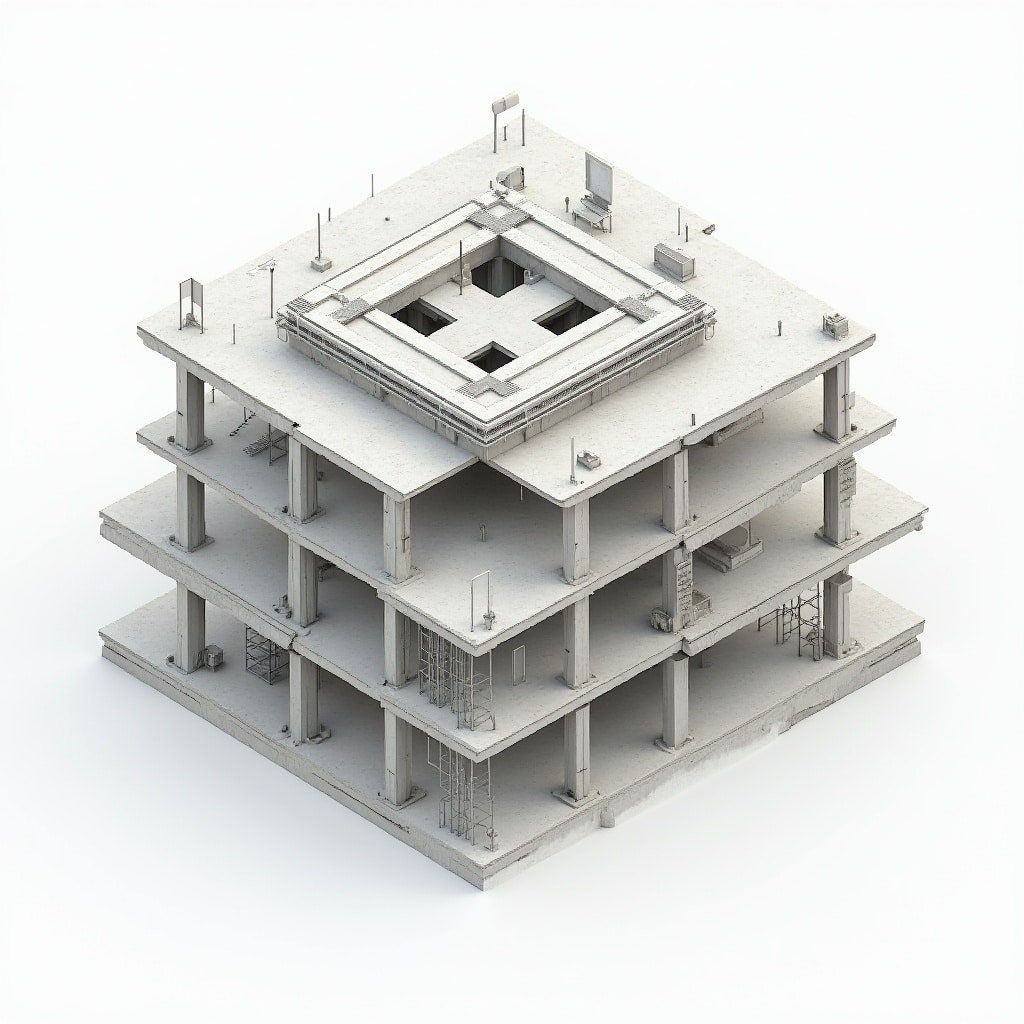
From a construction perspective, simple structures are inherently more buildable. Repetition of elements, regular grids, and straightforward connections reduce the likelihood of site errors and misinterpretation of drawings. This directly translates into faster construction, lower labor costs, and improved quality control. Complexity on paper rarely survives the realities of the construction site without compromise. Simplicity does.
Durability is also closely tied to simplicity. Every additional joint, transition, or nonstandard detail introduces a potential point of weakness. Over the life of a building, these points become the locations where cracks initiate, water penetrates, and maintenance costs accumulate. Simple, robust detailing reduces exposure to deterioration and extends service life. In long-term asset performance, fewer details executed well consistently outperform intricate solutions executed under real-world constraints.
Structural simplicity does not mean intellectual shortcuts or conservative overdesign. On the contrary, achieving simplicity requires deeper understanding. It demands early coordination with architecture, disciplined control of geometry, and intentional restraint. The engineer must decide what is truly necessary and eliminate what is not. This process is more demanding than adding layers of complexity, because it requires confidence in fundamental principles rather than reliance on computational output.
Simplicity also enhances adaptability. Buildings with rational structural systems are easier to modify, strengthen, or repurpose as needs change. Clear spans, regular column layouts, and consistent structural depths provide flexibility that complex, highly customized systems cannot offer. In a changing economic and regulatory environment, this adaptability is a strategic advantage.
Ultimately, structural simplicity is not the absence of sophistication; it is the result of it. The most enduring structures throughout history—from bridges to civic buildings—share this quality of clarity and restraint. Advanced engineering is not defined by how complex a solution appears, but by how effectively it solves the problem with precision and economy. In structural design, simplicity is not just elegant—it is superior.