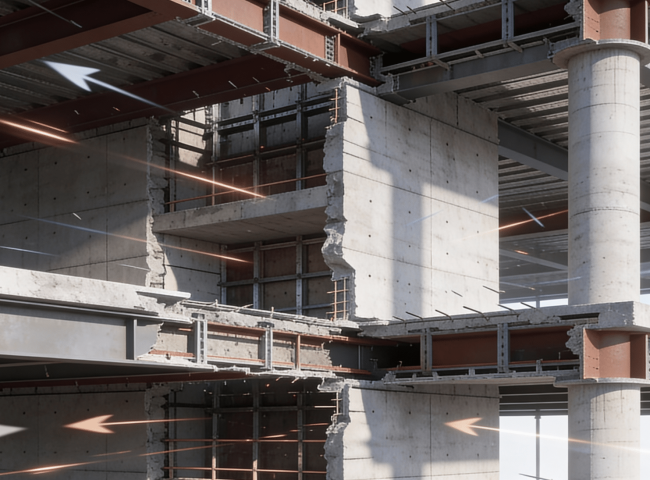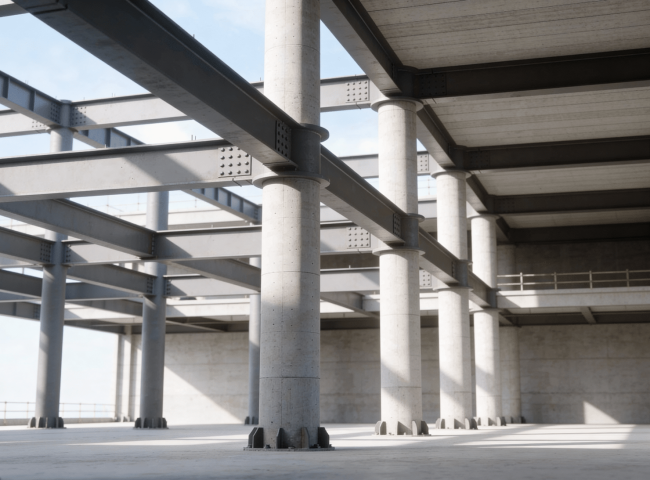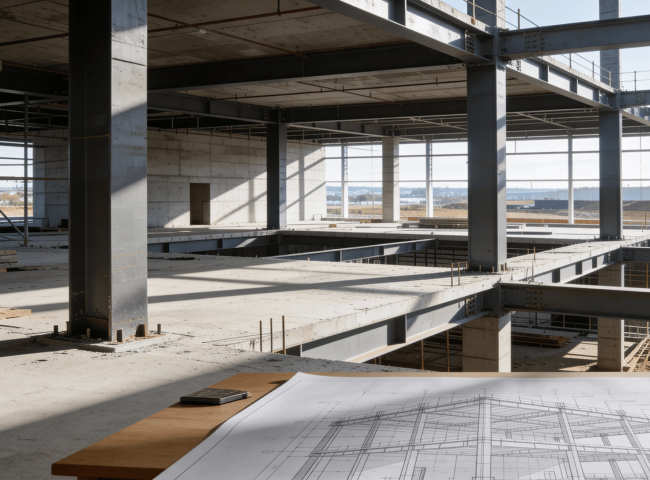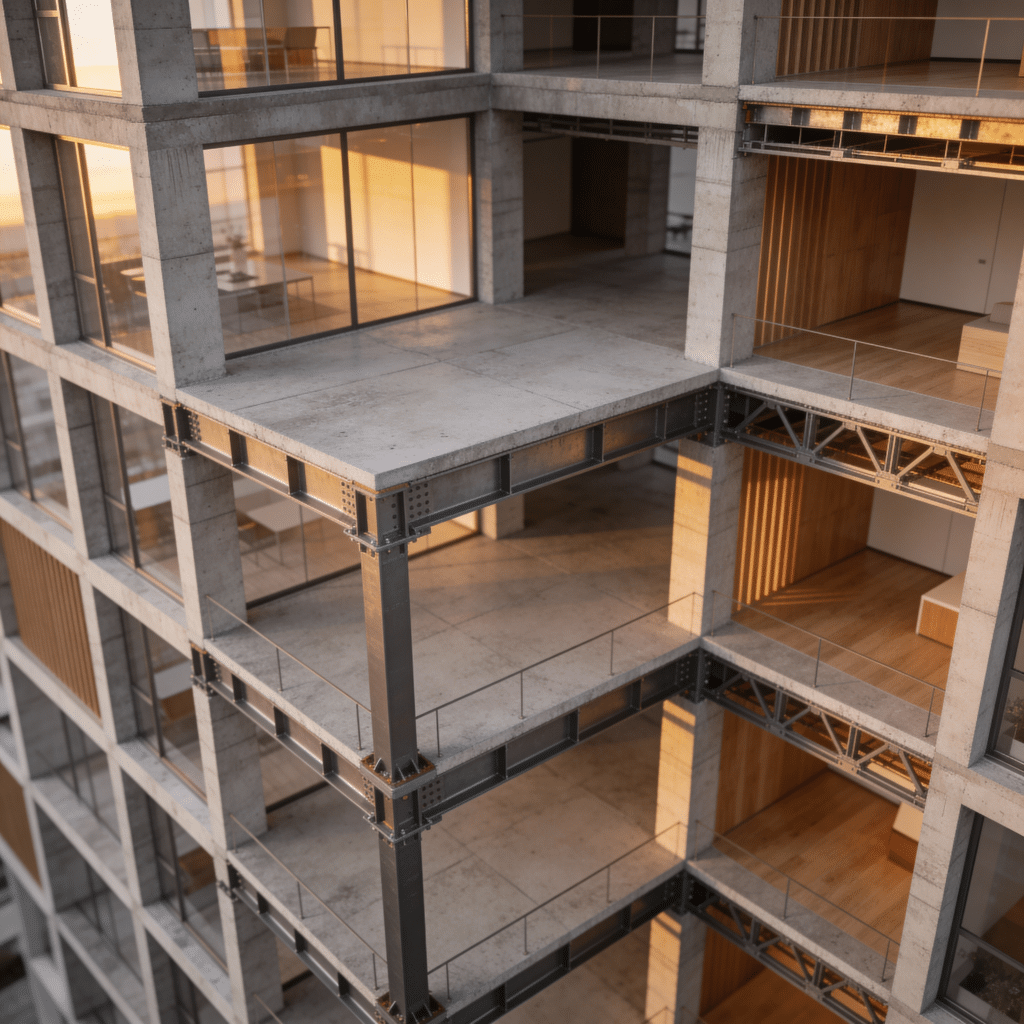
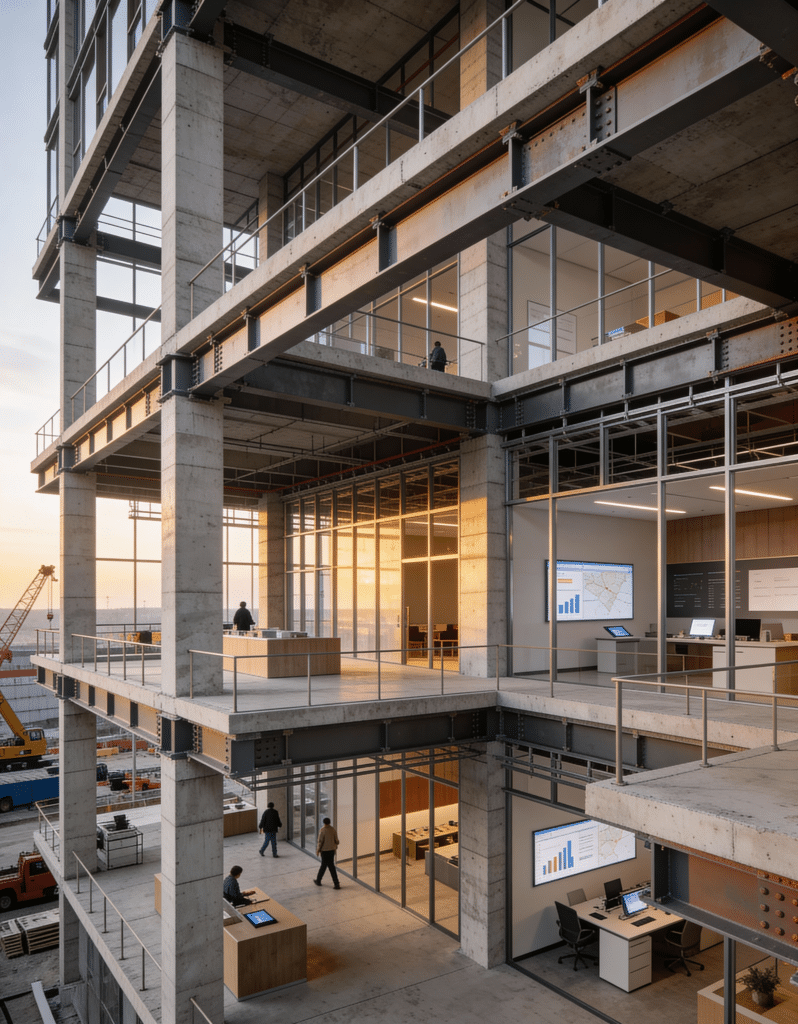
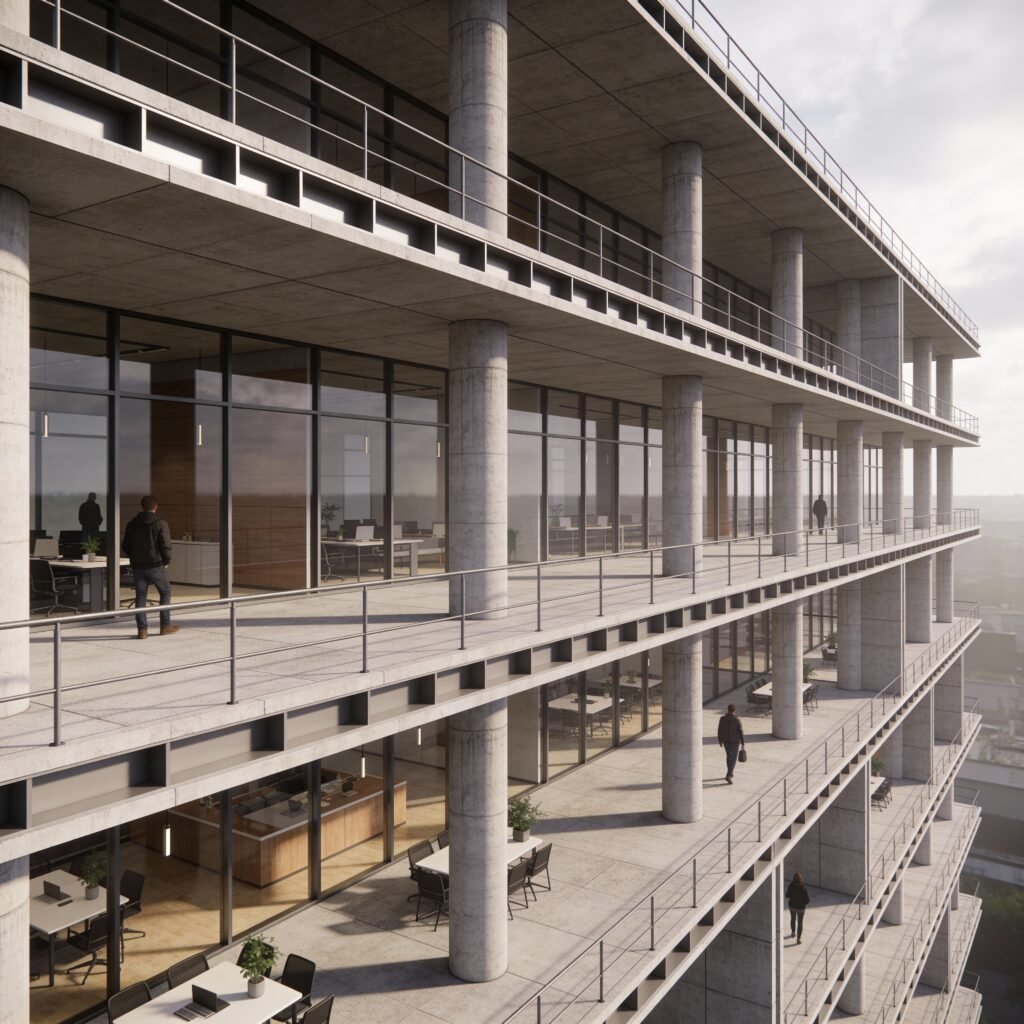
Structural design is often approached as a technical necessity—an obligatory phase to ensure a building stands safely and meets code requirements. This mindset is not only limited; it is costly. In reality, structural design is a long-term investment decision that determines how a building performs, adapts, and retains value throughout its entire lifespan.
A building’s value is not fixed at handover. It evolves over decades of use, maintenance, and transformation. The structural system chosen at the design stage directly influences this trajectory. Decisions regarding spans, load paths, material systems, and structural grids define how easily a building can be modified, strengthened, or repurposed in the future. A poorly conceived structural layout locks a project into rigid constraints, while a well-planned system preserves flexibility and extends usefulness.
Durability, in particular, is not an outcome to be hoped for—it is a condition that must be deliberately designed. Material selection, concrete cover, crack control strategies, detailing of joints, and protection against environmental exposure all play a decisive role in service life. When these considerations are overlooked in favor of short-term savings, the consequences emerge later as corrosion, excessive deflection, leakage, and premature deterioration. The cost of repairs, disruptions to occupants, and loss of asset value often far exceeds the initial savings made during construction.
Structural design also governs long-term operational efficiency. Heavier-than-necessary structures increase material consumption and foundation demands, while under-optimized systems lead to excessive maintenance and limited adaptability. An efficient structural solution balances safety, performance, and economy—not only at the time of construction, but over decades of operation. This balance requires early integration of structural thinking with architectural intent, rather than treating the structure as a secondary response to finalized forms.
Adaptability is another critical dimension of long-term value. Buildings that can accommodate changes in use—offices converted to residential units, industrial spaces adapted for new technologies, or floors reconfigured to meet evolving regulations—retain relevance in shifting markets. Structural systems with rational grids, appropriate load allowances, and clear load transfer mechanisms enable such transformations with minimal intervention. In contrast, structures designed only for immediate needs become obsolete faster and demand expensive retrofitting.
Ultimately, structural design is a strategic decision, not a line item to be minimized. It shapes construction risk, lifecycle cost, resilience, and future potential. Clients and designers who recognize this treat structural engineering as a value driver rather than a constraint. By investing in thoughtful, durable, and adaptable structural solutions from the outset, projects achieve longer service lives, reduced long-term costs, and sustained asset value. In this sense, good structural design is not an expense—it is a commitment to the building’s future.